
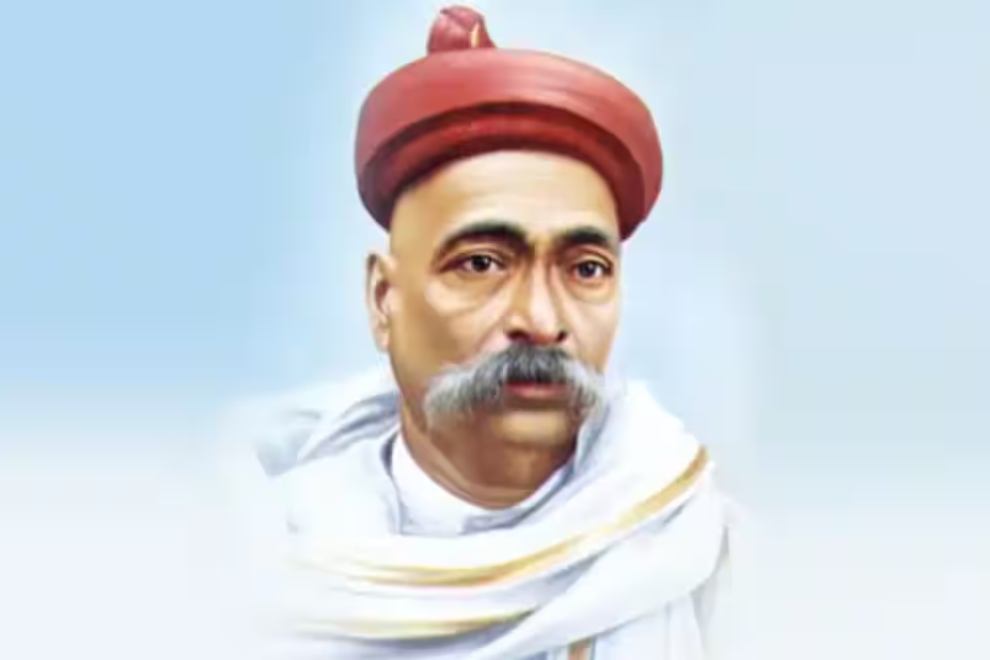
Lokmanya Tilak Quotes: Complete Meaning, Context & Analysis (2500-Word Professional Guide)
Lokmanya Bal Gangadhar Tilak (1856–1920) is celebrated as one of India’s greatest freedom fighters, philosophers, educators, and nationalist leaders. Known as the “Father of Indian Unrest,” Tilak dedicated his life to awakening the spirit of independence among Indians during British rule. His quotes remain deeply influential even today, inspiring patriotism, self-discipline, and commitment to truth and justice.This article is an in-depth, SEO-optimized exploration of Lokmanya Tilak quotes—with detailed explanations, historical context, and philosophical meanings. It offers readers, educators, students, and researchers a complete understanding of Tilak’s thoughts and ideals.
Introduction: Why Lokmanya Tilak’s Quotes Still Inspire Millions
- Lokmanya Tilak was not just a political leader—he was a teacher, journalist, reformer, economist, and philosopher. His writings in Kesari and The Mahratta shaped public opinion, while his speeches ignited the flames of nationalism across India.
His quotes remain powerful because
1.1. They are rooted in patriotic spirit
Tilak’s words came from his fearless resistance to British colonialism.
1.2. They express timeless values
Self-discipline, unity, education, and courage remain relevant today.
1.3. They show exceptional clarity and strength
Tilak had a direct and impactful speaking style, making his quotes memorable.
1.4. They represent India’s early nationalist movement
His thoughts reflect the evolution of India’s struggle for Swaraj. - Famous Lokmanya Tilak Quotes With Meaning & Context
Below are Tilak’s most influential quotes, explained with depth and historical background.
2..1. “Swaraj is my birthright, and I shall have it.”
This is Tilak’s most celebrated quote and a defining statement of India’s freedom struggle. He popularized it during speeches in the late 19th century, especially in the context of aligning Indians for political action.
Meaning
This quote expresses Tilak’s unwavering belief that freedom is not a privilege granted by an authority—it is a natural right of every individual.Analysis
It changed the tone of India’s freedom movement from request to demand.
It inspired thousands of Indians to join the struggle actively.
It symbolizes courage, determination, and national pride.
This line remains one of the greatest Indian independence quotes of all time.
2.2. “If God is with us, who can be against us?”
Tilak referenced this idea in his philosophical writings, often blending spirituality with nationalism.
Meaning
It emphasizes faith and moral strength. If one’s principles are pure and aligned with righteousness, opposition becomes powerless.
Analysis
Tilak believed that the fight against injustice was a sacred duty.
This quote boosted morale during politically difficult times.
2.3. “Progress is impossible without struggle.”
Context
Tilak promoted the idea of active resistance. He rejected passive acceptance of colonial rule
Meaning
Growth—personal, national, or social—requires challenges. Struggle is not a burden but a path to self-strengthening.
Analysis
This quote is often cited in motivational contexts, symbolizing perseverance.
2.4. “Religion and practical life are not different. To take sanyas is not to abandon life.”
Context
Tilak wrote extensively on the Bhagavad Gita, interpreting it as a call to duty rather than withdrawal.
Meaning
He emphasized Karmayoga—the philosophy of action.
True spirituality lies in responsibility, not renunciation.
Analysis
This teaching changed India’s perspective on religious duty and social responsibility.
2.5. “Freedom is the soul of every nation.”
Context
Tilak consistently argued that political freedom is essential for cultural and economic growth
Meaning
A nation without freedom loses its identity.
Just as the soul defines an individual, freedom defines a nation.
Analysis
This quote became a foundational idea for early nationalist movements.
2.6. “The problem is not the lack of resources but the lack of motivation.”
Context
Tilak encouraged Indians to build self-confidence and self-reliance rather than depend on British governance.
Meaning
India had talent, energy, and potential—what was missing was collective willpower.
Analysis
His message aimed to awaken dormant strength within society.
2.7. “Duty is God, and work is worship.”
Context
Inspired by the Gita, Tilak believed one must perform duties selflessly.
Meaning
True devotion lies in fulfilling responsibilities, not rituals.
Analysis
This quote influenced future leaders like Mahatma Gandhi and Subhash Chandra Bose.
2.8. “In India, the lack of unity is our greatest weakness.”
Context
India’s diversity made unity difficult. British rulers often used divide-and-rule strategies.
Meaning
Tilak saw unity as essential for resistance.
Analysis
The call for unity later became the backbone of India’s freedom movement.
Tilak’s Rhetorical Style: Why His Quotes Are Timeless
Lokmanya Tilak’s quotes remain impactful because of his unique public communication style.
3.1. Clarity and Simplicity
Tilak communicated complex ideas in straightforward, memorable lines.
3.2. Fearlessness
His boldness inspired confidence among common people.
3.3. Blend of spirituality and nationalism
He used Hindu philosophy not for division but to inspire action and moral courage.
3.4. Moral conviction
Every quote reflects strong ethical values.
3.5. Call to action
Tilak’s quotes never encourage passivity; they push society toward active engagement.
Lokmanya Tilak’s Quotes in Education, Politics & Modern Society
- Tilak’s words continue to influence:
4.1. Motivational speeches
His quotes are used in academic and leadership contexts to encourage discipline and courage.
4.2. Political science research
Scholars study his rhetoric to understand India’s early nationalist movements.
4.3. School and college textbooks
Tilak’s teachings are part of Indian curriculum, reflecting patriotism and civic responsibility.
4.4. Social movements
His call for unity and self-effort remains relevant in modern activism. - Deeper Philosophical Interpretation of Lokmanya Tilak Quotes
Tilak’s quotes go beyond political messages. They reveal his worldview.
5.1. The Philosophy of Swaraj
Tilak viewed Swaraj (self-rule) as both political freedom and inner freedom.
It meant:
- Self-discipline
- Self-respect
- National pride
- Independence of thought
His quotes consistently emphasize dignity and moral independence.
5.2. Duty Over Desire
His Gita commentary stressed karma—doing one’s duty without selfish motives.
5.3. Unity as Strength
He believed India could only resist colonial rule if united across:
- caste
- religion
- language
- region
5.4. Education as Empowerment
Tilak founded educational institutions and wrote that education must create thinkers, not followers.
5.5. Moral Courage
Many of his quotes reflect unwavering moral conviction—even during imprisonment.
Extended List of Lokmanya Tilak Quotes (With Short Notes)
- Here are additional quotes with brief explanations to enrich the 2500-word article:
6.1. “Self-help is the best help.”
Encourages self-reliance - 6.2. “The only cure for fear is action.”
Promotes bravery through participation.
6.3. “Nations are born in the hearts of poets; they prosper and die in the hands of politicians.”
A profound observation on culture and governance.
6.4. “A true leader is one who serves.”
Tilak believed leadership meant responsibility, not privilege.
6.5. “The strength of a nation lies in its youth.”
He emphasized youth empowerment through education and values.
6.6. “You must not worry about the result of your efforts.”
An adaption of Nishkama Karma (selfless action).
6.7. “Morality lies in action, not in speech.”
Criticized leaders who talked but never acted. - Lokmanya Tilak’s Quotes in the Freedom Struggle
Tilak’s words shaped the independence movement in many ways:
7.1. Inspired Extremist Nationalism
Tilak believed moderate methods were too slow; his quotes demanded stronger resistance.
7.2. Mobilized youth
He connected emotionally with young Indians, motivating them to join the cause.
7.3. Spread through newspapers
Kesari and The Mahratta amplified his ideas across India.
7.4. Influenced future legends
Leaders like Gandhi, Bose, and Lala Lajpat Rai acknowledged Tilak’s impact. - Legacy of Lokmanya Tilak’s Quotes
Tilak’s thoughts shaped:
Modern Indian political thought
- Youth leadership models
- Educational philosophies
- National pride narratives
- Civic responsibility ethics
Even today, his words remain relevant because they address universal human values—freedom, duty, courage, unity, and integrity.
- Conclusion:
Why Lokmanya Tilak’s Quotes Matter Today
Lokmanya Bal Gangadhar Tilak’s quotes are more than historical statements—they are guiding principles for modern society. His fearless call for Swaraj, his belief in duty and righteousness, and his commitment to India’s cultural and intellectual awakening continue to inspire millions.
Tilak’s words encourage us to:
- stay united
- fight injustice
- work with discipline
- take responsibility
- live courageously
His legacy lives on through his ideas—ideas powerful enough to ignite a revolution and still relevant enough to guide generations.