banners 2 5

Callan McAuliffe: Rising Actor and His Most Inspiring Quotes

Callan McAuliffe is a talented Australian actor recognized for his remarkable performances in both film and television. Known for his roles in Flipped, I Am Number Four, and as a young Jay Gatsby in The Great Gatsby, McAuliffe has earned praise for his natural acting style, charisma, and versatility. Beyond his acting career, he is also an ambassador for UNICEF Australia, showing his commitment to humanitarian work and making a positive difference in the world. His dedication to his craft and his grounded personality make him a true role model for aspiring artists. 10 Inspirational Quotes by Callan McAuliffe Final Thoughts Callan McAuliffe’s career and outlook on life show the power of authenticity, hard work, and compassion. His words encourage others to stay true to themselves while striving for excellence.

banners 1 7

Bhagat Singh: Revolutionary Leader and His Most Inspiring Quotes

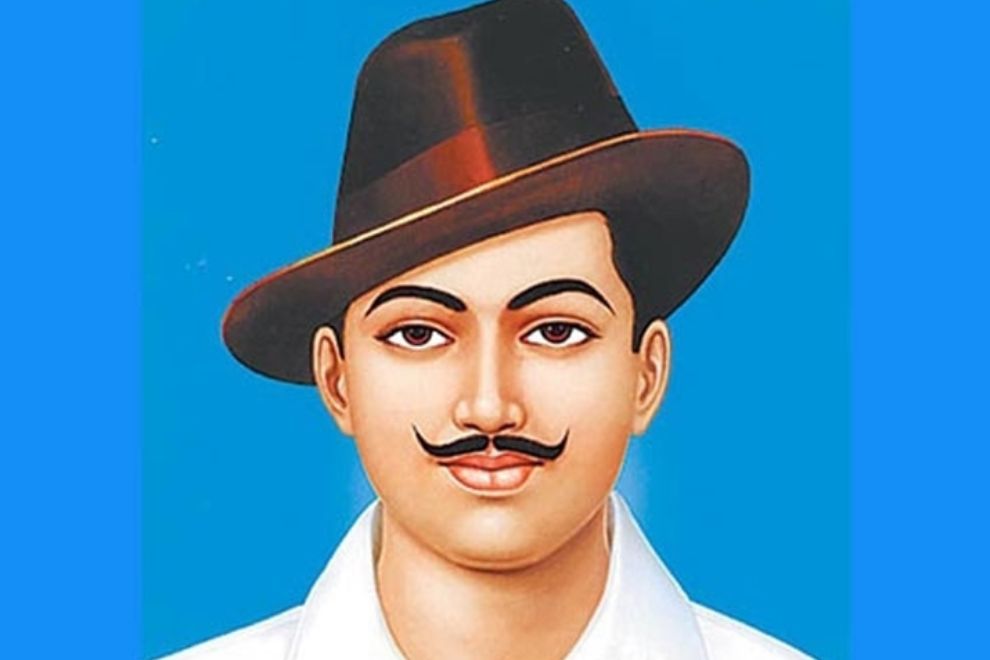
Bhagat Singh was a fearless revolutionary and one of the most iconic figures in India’s struggle for independence. Known for his unmatched courage, intellectual sharpness, and unwavering dedication to the cause of freedom, Singh’s life continues to inspire generations. From a young age, he was deeply influenced by the injustices of colonial rule and resolved to fight against oppression. His writings and actions reflected his belief in equality, justice, and sacrifice for the greater good. Even in the face of death, he remained steadfast in his ideals, becoming a martyr at a young age and a timeless symbol of patriotism. 10 Inspirational Quotes by Bhagat Singh Final Thoughts Bhagat Singh’s courage, vision, and sacrifice remain a beacon of inspiration. His life reminds us to stand firm in our beliefs, challenge injustice, and work fearlessly for a better world.

banners 13

Caio Fonseca: Celebrated American Painter and His Most Inspiring Quotes

Caio Fonseca is an acclaimed American painter recognized for his abstract, harmonious compositions that often merge geometric precision with musical rhythm. Growing up in a family of artists, Fonseca developed a unique approach to art that blends modernist influences with his own sense of balance, movement, and space. His works have been exhibited in prestigious galleries and museums worldwide, reflecting his deep understanding of color, form, and creative expression. Fonseca’s art is not only visually striking but also carries an underlying sense of poetry, inspiring viewers to think beyond the canvas. 10 Inspirational Quotes by Caio Fonseca Final Thoughts Caio Fonseca’s career demonstrates how a strong artistic vision can bridge tradition and innovation. His approach to art and life encourages us to embrace creativity, seek balance, and let our passions shape our path.

banners 6 3

Mahavira: Inspirational Teachings and Quotes from the Jain Spiritual Leader

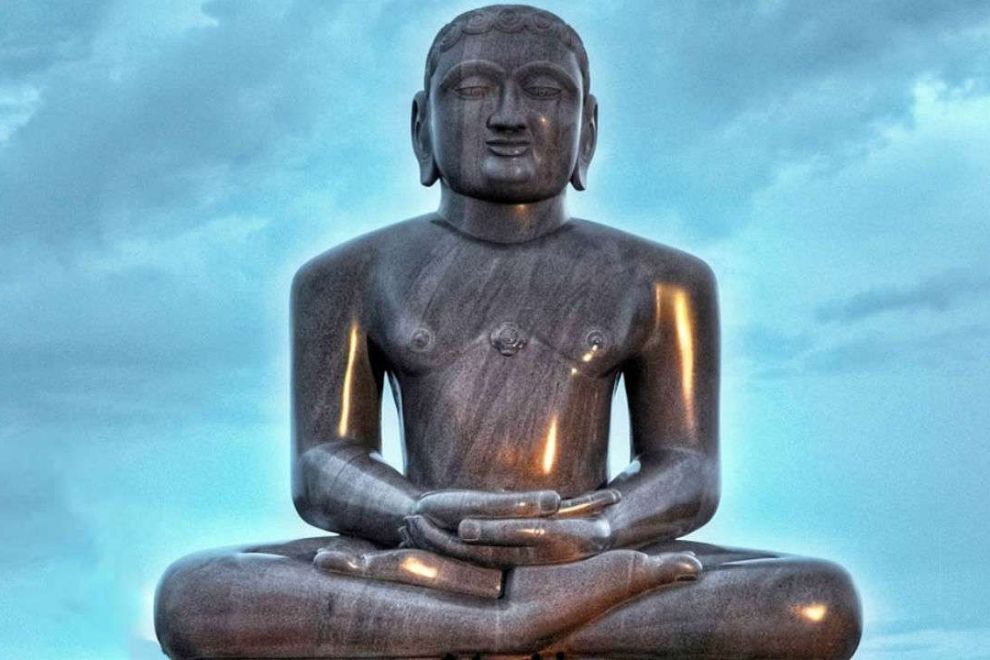
Mahavira was a revered spiritual teacher and the 24th Tirthankara in Jainism. He dedicated his life to spreading the principles of ahimsa (nonviolence), satya (truth), and aparigraha (non-attachment). His wisdom emphasized self-discipline, compassion, and spiritual awakening. Mahavira’s philosophy goes beyond religion, offering timeless guidance on how to live a life of peace, ethical conduct, and respect for all living beings. 10 Inspirational Quotes by Mahavira Final Thoughts Mahavira’s teachings inspire a life rooted in peace, kindness, and self-awareness. His timeless wisdom serves as a guide for those seeking harmony with themselves and the world.

banners 5 3

Madison Pettis: Inspiring Quotes from the Multi-Talented Actress and Model

Madison Pettis is an American actress, model, and voice artist who first captured attention as a child star in films like The Game Plan and later built a versatile career in television, film, and modeling. Known for her charisma and professionalism from a young age, she has worked with major brands and productions, continuing to evolve in the entertainment industry. Her journey reflects hard work, adaptability, and confidence, inspiring young people to pursue their dreams while staying true to themselves. 10 Inspirational Quotes by Madison Pettis Final Thoughts Madison Pettis is a reminder that talent paired with determination can lead to lasting success. From her early years in Hollywood to her current projects, she continues to inspire audiences with her authenticity and drive.

banners 4 3

Madeleine M. Kunin: Inspiring Quotes from America’s Trailblazing Female Governor

Madeleine M. Kunin is a pioneering American politician, diplomat, and author who made history as the first woman governor of Vermont and the first Jewish woman to serve as governor of any U.S. state. She later served as U.S. Ambassador to Switzerland and Deputy Secretary of Education, continuing her lifelong advocacy for education reform, women’s rights, and civic engagement. Her leadership style reflects integrity, compassion, and a commitment to creating opportunities for others. Through her work in politics and writing, Kunin has inspired generations to participate in public service and believe in the power of change. 10 Inspirational Quotes by Madeleine M. Kunin Final Thoughts Madeleine M. Kunin’s life and career show that breaking barriers is possible through persistence, vision, and service. Her story continues to encourage young leaders—especially women—to enter politics and lead with purpose.

banners 3 3

The Dark Truth of India’s Freedom

Introduction – The Glory and the Shadows On the midnight of 15 August 1947, the tricolour rose high in the Indian sky, symbolising independence after nearly two centuries of British rule. The streets roared with celebration, and history books recorded it as a moment of ultimate triumph. But behind the fireworks and speeches lay a reality soaked in blood, betrayal, and compromise. India’s freedom came with a cost so heavy that even today, its weight is carried by generations. The story we were taught in schools is only one version — the decorated one. The truth, when unwrapped, reveals a complex web of political deals, silent betrayals, and the voices of those who never made it into history books. Before 1947 – The Struggle Behind the Struggle While the official narrative focuses on non-violence as the path to independence, history records multiple parallel movements, each with its own strategy and sacrifices. The Indian freedom struggle was not just about peaceful protests; it was also about underground resistance, armed revolutions, secret societies, and the countless ordinary citizens who fought without hope of recognition. These stories were overshadowed by the dominance of a few political leaders in official accounts, leaving the contribution of many fighters buried. Quote 1: “History doesn’t hide the truth; humans do. And we call it ‘curriculum’.” The Forgotten Fighters – Erased from Memory Many who fought for freedom didn’t get a place in the golden frame of the independence narrative. From Matangini Hazra, who was shot while carrying the Indian flag, to Alluri Sitarama Raju, who led a tribal revolt in Andhra Pradesh, their sacrifices were often footnotes. Why? Because the post-independence political landscape needed a unified, simplified hero narrative to build a nation’s identity — and complexity was inconvenient. Those who didn’t align with the dominant ideology of the new rulers were left out. The British were gone, but the politics of selective remembrance began immediately. Quote 2: “Not all heroes get statues. Some only get silence.” Partition – Freedom’s Blood Price The partition of India in 1947 remains one of the largest forced migrations in human history. Over 14 million people were displaced, and an estimated 1 to 2 million lost their lives in communal violence. The decision to divide the country was not a sudden emergency measure; it was the result of years of political failure, communal polarisation, and hurried British exit strategies. Independence came, but it was delivered through a corridor of corpses. Quote 3: “We got freedom at midnight, but woke up in the morning surrounded by graves.” Economic Realities Post-Independence Freedom was supposed to open the doors to prosperity, but the country inherited a crippled economy. While independence was politically complete, economic freedom was still far away — and in many ways, India remained chained to global powers through trade, aid, and loans. Quote 4: “We were free to wave our own flag, but still had to beg for bread.” Political Power Games After Freedom One of the darkest truths of India’s freedom story is that colonial power didn’t disappear — it shifted hands. Some decisions were made for stability; others for personal and party power. The revolution promised to the masses was quietly replaced by administrative continuity. Quote 5: “Independence didn’t break the chains; it just handed the keys to new masters.” Cultural & Educational Manipulation After independence, the shaping of national identity was in the hands of the new leaders. This meant rewriting history to suit political narratives. School textbooks began to glorify certain leaders while downplaying others. The complexity of the freedom struggle — where moderates, revolutionaries, spiritual leaders, and armed fighters all played a part — was compressed into a few neat chapters. The result? Generations grew up knowing only half the story. Quote 6: “Erase a man’s story, and you erase him twice — once from history, once from memory.” How the Common People Paid the Price For the farmers in Punjab, Bengal, and Bihar, independence didn’t mean an end to poverty. For factory workers, there was no sudden rise in wages. For tribal communities, the exploitation of land and resources continued — now by Indian corporations instead of foreign companies. The promise of Swaraj (self-rule) became political rhetoric. The elite benefitted first, while the poor waited decades for real change. Even today, in rural India, freedom is still a dream measured in access to clean water, electricity, and education. Quote 7: “Freedom given without equality is like a bird with broken wings.” Media and the Selective Storytelling of Freedom Media played a vital role in the freedom struggle, but post-independence, it became a tool for nation-building propaganda. While it was important to inspire unity, this also meant that dissenting voices were labelled as anti-national. Critical questions about partition violence, economic policies, and political corruption were often avoided. The cost of speaking against the dominant narrative was high — a trend that, unfortunately, still exists. Quote 8: “Truth is the first prisoner of patriotic propaganda.” The Lessons We Ignore Every independence anniversary is an opportunity to reflect — not just to celebrate. But India’s freedom story teaches us that true freedom is not just the absence of foreign rulers, it is the presence of justice, equality, and dignity for all. The dark truths remind us that independence was not the end of the struggle — it was merely a change in its nature. The challenge now is to ensure that future generations inherit not just political liberty, but also social and economic fairness. Quote 9: “The cost of forgetting history is paying for it twice.” 50 Original Quotes on the Dark Truth of Freedom Conclusion – Freedom’s Incomplete Journey India’s freedom is a story of courage, resilience, and sacrifice — but also of compromise, loss, and unfinished promises. The independence we celebrate each year is real, but so are the scars of partition, the erasure of forgotten fighters, and the unfulfilled dreams of millions. Understanding the dark truths of independence is not unpatriotic — it is

banners 2 4

Partition of India – A Story of Freedom and Pain

Introduction The Partition of India in 1947 was one of the most significant and heartbreaking events in South Asian history. It marked the end of nearly two centuries of British colonial rule and the birth of two independent nations—India and Pakistan. But this freedom came at a heavy cost—millions displaced, families separated, and countless lives lost. The memories of Partition are etched deep into the hearts of those who lived through it, and its echoes still shape the relationship between the two countries today. Historical Background In the early 20th century, the Indian independence movement gained momentum with leaders like Mahatma Gandhi, Jawaharlal Nehru, and Subhas Chandra Bose fighting for freedom. The demand for a separate Muslim homeland, championed by Muhammad Ali Jinnah and the All-India Muslim League, became a central political issue in the 1940s. Religious tensions, fueled by years of colonial policies that encouraged division, grew stronger. The British strategy of “divide and rule” deepened the rift between Hindus and Muslims, and when the final withdrawal plan was discussed, Partition seemed inevitable. Key Events Leading to Partition The Radcliffe Line and Division The borders between India and Pakistan were drawn by a British lawyer, Sir Cyril Radcliffe, who had never been to India before. He had just five weeks to decide the fate of millions. His decisions split villages, rivers, railway lines, and even homes into two different countries, creating chaos and mass migration. Impact on People The Partition triggered one of the largest migrations in human history. Around 14 million people crossed borders—Hindus and Sikhs moved to India, Muslims to Pakistan. Trains arrived full of corpses, entire villages were burned, and women faced unspeakable atrocities. Families that had lived together for generations were torn apart overnight. It was not just a political separation—it was an emotional amputation. Personal Stories & Human Cost Elderly survivors still recall the journey they made—often on foot, without food or water. Children were lost in the chaos, never to be found again. Neighbors who once celebrated festivals together suddenly saw each other as enemies. Political Consequences Long-Term Effects Lessons from History Partition reminds us that political decisions can have devastating human consequences. While freedom was a cause for celebration, the bloodshed that accompanied it shows that unity, tolerance, and dialogue are the true foundations of peace. 50 Original Quotes on the Partition of India (Mix of English & Hindi for emotional depth) Conclusion The Partition of India is a reminder that while political borders may be drawn in ink, they leave behind marks that last generations. The tragedy was not just in the violence, but in the loss of shared culture, trust, and love. Even today, as India and Pakistan walk separate paths, the stories of Partition call on us to choose peace over prejudice, and humanity over hatred.

banners 1 6

Independence Day of India – A Journey of Freedom and Pride

Introduction Independence Day of India, celebrated every year on 15th August, is more than just a national holiday — it is the soul of India’s identity. On this day in 1947, India broke free from over 200 years of British colonial rule and stepped into the light of self-governance, democracy, and unity. The day is a tribute to the countless freedom fighters who sacrificed their lives for the nation’s liberty and to the visionaries who laid the foundation of modern India. Historical Background India’s journey to freedom was not a single event but a long-drawn movement that began centuries before 1947. From the First War of Independence in 1857 to the Non-Cooperation Movement, Civil Disobedience Movement, and the Quit India Movement, every struggle brought India closer to sovereignty. Key events include: – 1857 Revolt: Led by Mangal Pandey, Rani Lakshmibai, and Tantia Tope. – Formation of Indian National Congress (1885). – Jallianwala Bagh Massacre (1919). – Salt March (1930). – Quit India Movement (1942). Finally, on the midnight of 14–15 August 1947, Pandit Jawaharlal Nehru delivered his famous “Tryst with Destiny” speech. Significance of Independence Day Independence Day stands for unity in diversity, self-governance, democratic values, and national pride. It reminds citizens of the sacrifices made by heroes like Bhagat Singh, Subhas Chandra Bose, Mahatma Gandhi, Sardar Patel, and Bal Gangadhar Tilak. Independence Day Celebrations Across India In New Delhi, the Prime Minister hoists the national flag at the Red Fort and addresses the nation. The event features a Guard of Honour, cultural programs, and patriotic songs. Across India, streets and homes are decorated with the tricolor, and kite flying, movies, and events mark the day. The Indian Flag – A Symbol of Freedom The Tiranga represents courage (saffron), peace (white), prosperity (green), and the Ashoka Chakra — the eternal wheel of law. Patriotism and Modern Challenges Independence Day renews patriotism but also reminds us of challenges like poverty, unemployment, corruption, environmental threats, and maintaining unity. Independence Day in the Global Context India’s independence inspired many nations under colonial rule. Today, India is one of the largest democracies, playing a key role in global peace and economy. Life Lessons from Independence Day Freedom comes with responsibility; unity is strength; sacrifice leads to progress; education empowers; and every citizen can bring change. 50 Original Independence Day Quotes “Freedom is not just a gift from our past, it is a responsibility for our future.” “Our flag flies high because it is lifted by the sacrifices of millions.” “Independence is not a date, it is a mindset.” “The tricolor is not just a flag, it is the heartbeat of our nation.” “Let us build the India our freedom fighters dreamed of.” “True patriotism is serving your country when no one is watching.” “Freedom is the courage to shape your destiny.” “A strong nation is built by responsible citizens.” “Our ancestors gave us freedom, our duty is to give our children a better India.” “Independence Day is not just a celebration, it’s a promise.” “The real celebration of freedom is in equality and justice for all.” “Every drop of a martyr’s blood is a seed of liberty.” “Independence is living with dignity and respect.” “Raise the flag in your heart before you raise it on a pole.” “We are free because they were brave.” “The tricolor tells a story that words cannot.” “Freedom without responsibility is just chaos.” “Patriotism is not seasonal; it’s a lifelong commitment.” “Our freedom fighters fought with hope, let’s honor them with action.” “A nation grows when its people grow together.” “The strength of India is in its unity.” “Freedom is precious; protect it with integrity.” “Celebrate freedom, but never forget its price.” “Independence is a bridge to progress, not a resting place.” “Our history is written in courage.” “Salute the flag, but also salute the farmer, soldier, and teacher.” “True independence is when no citizen is left behind.” “Let the spirit of freedom guide every decision you make.” “We are the voice of those who gave their lives in silence.” “The tricolor is the proof of our resilience.” “Honor the past, empower the present, and secure the future.” “Patriotism is love in action.” “Every generation must earn the right to be called free.” “Our greatest tribute to freedom is unity.” “India’s strength is in the diversity it embraces.” “Independence is not for selfishness, it is for service.” “The soil of India is soaked with the blood of heroes.” “Celebrate freedom by uplifting the weakest among us.” “Freedom is when the poorest citizen feels safe and respected.” “The flag is our promise to never bow down.” “We are the dreams our ancestors fought for.” “India’s heart beats in every patriot’s chest.” “Our freedom is living proof of resilience.” “Never take liberty for granted.” “To love India is to serve its people.” “Our diversity is not our weakness, it is our greatest strength.” “The true wealth of India is its unity.” “Freedom thrives in a just society.” “We are custodians of the freedom we inherited.” “May our flag always wave over a land of peace, unity, and prosperity.”

banners 12

Saddam Hussein: Rise, Rule, and Legacy of Iraq’s Strongman

1. Introduction Saddam Hussein remains one of the most polarizing figures of modern Middle Eastern history. As the president of Iraq from 1979 to 2003, he shaped the country through a combination of authoritarian rule, ambitious modernization projects, war, and political repression. His tenure witnessed both economic development and devastating conflicts that altered Iraq’s trajectory for decades. To some, he was a defender of Arab nationalism and Iraqi sovereignty; to others, he was a ruthless dictator whose policies brought untold suffering to his people. 2. Early Life and Background Saddam Hussein Abd al-Majid al-Tikriti was born on April 28, 1937 in the village of Al-Awja, near Tikrit, Iraq. His early life was marked by poverty and hardship. His father either died or disappeared before Saddam’s birth, leaving his mother to raise him. At age ten, Saddam left his village for Baghdad, living with his uncle Khairallah Talfah, a fervent Arab nationalist and a strong influence on the young Saddam’s political worldview. From an early age, Saddam displayed a combination of ambition, resilience, and a readiness to use force. These traits would later define his political career. His teenage years were shaped by the growing influence of the Ba’ath Party, an Arab nationalist movement that sought to unite the Arab world under a single socialist framework. 3. Rise to Power In 1957, Saddam formally joined the Ba’ath Party, quickly gaining a reputation for loyalty and fearlessness. A year later, he participated in an assassination attempt against then-Prime Minister Abdul Karim Qasim, which forced him into exile. He spent years in Egypt before returning to Iraq after the Ba’athists briefly seized power in 1963. The defining moment came with the 1968 coup, when the Ba’ath Party, supported by the military, took control of the government. Saddam initially served as vice president under President Ahmed Hassan al-Bakr. However, his influence rapidly expanded through his control over the Mukhabarat (secret police) and other security forces. By July 16, 1979, al-Bakr resigned, and Saddam assumed the presidency, consolidating power through a purge of potential rivals. 4. Political Ideology and Governance Saddam Hussein’s rule was rooted in Ba’athist ideology, combining Arab nationalism with elements of socialism. He championed the idea of a united Arab world, opposing Western influence and Zionism. Economically, he nationalized Iraq’s oil industry in 1972, significantly increasing state revenues. These funds financed infrastructure projects, education, healthcare, and industrial development, turning Iraq into one of the most advanced states in the region during the late 1970s. However, this modernization came at the cost of political freedom. Saddam’s governance relied on an extensive security apparatus, censorship, and the suppression of dissent. His image was omnipresent—through statues, portraits, and state-controlled media—creating a cult of personality that reinforced his authority. 5. Key Events During His Rule The Iran–Iraq War (1980–1988) Tensions with Iran escalated after the 1979 Iranian Revolution, which brought Ayatollah Khomeini to power. Saddam feared the spread of Shia revolutionary ideology into Iraq’s Shia-majority population. In September 1980, Iraq invaded Iran, sparking an eight-year war characterized by trench warfare, economic strain, and heavy casualties. The conflict ended in a stalemate, with neither side achieving decisive victory. Invasion of Kuwait (1990) In August 1990, Saddam ordered the invasion of Kuwait, accusing it of overproducing oil and stealing Iraqi reserves through slant drilling. The move triggered a swift international response, culminating in the Gulf War of 1991, in which a US-led coalition expelled Iraqi forces. Following the war, the United Nations imposed harsh sanctions that crippled Iraq’s economy. Internal Suppression Saddam’s regime was notorious for its brutal suppression of uprisings. After the Gulf War, Kurdish and Shia rebellions erupted but were crushed with overwhelming force. In 1988, during the closing stages of the Iran–Iraq War, Iraqi forces used chemical weapons in Halabja, killing thousands of Kurdish civilians. 6. Human Rights Record International organizations documented extensive human rights abuses during Saddam’s rule, including mass executions, torture, forced disappearances, and the targeting of ethnic and political minorities. His policies toward the Kurds, particularly the Anfal Campaign, were widely regarded as genocidal. Political prisoners often faced horrific conditions in detention centers, and dissent was met with immediate and often lethal retribution. 7. International Relations Saddam’s foreign policy shifted dramatically over time. During the Iran–Iraq War, he received support from both the United States and the Soviet Union, as they viewed Iran as a mutual threat. However, his invasion of Kuwait turned former allies into enemies. By the late 1990s, Iraq was increasingly isolated, with its economy devastated by sanctions and its military power diminished. 8. Fall from Power In 2003, the United States and its allies accused Saddam of possessing weapons of mass destruction (WMDs) and supporting terrorism. The US-led invasion in March 2003 quickly toppled his government. Saddam went into hiding but was captured in December 2003 near Tikrit in what became known as Operation Red Dawn. He was tried by the Iraqi Special Tribunal for crimes against humanity, primarily related to the killing of 148 Shia Muslims in the town of Dujail in 1982. Found guilty, Saddam Hussein was executed by hanging on December 30, 2006. 9. Legacy and Historical Debate Saddam Hussein’s legacy is deeply contested. The instability that followed his removal has led some to reassess the consequences of his overthrow, but few dispute the authoritarian nature of his regime. 10. Notable and Rephrased Saddam Hussein Quotes Authentic Historical Quotes (Rephrased for Originality): Original Saddam-Inspired Quotes (Unique Wording):6. “Power is not in the sword, but in the will to wield it without hesitation.”7. “A nation’s dignity is worth more than a thousand peaceful days under occupation.”8. “Strength without vision is chaos; vision without strength is weakness.”9. “History favors those who dare, not those who wait.”10. “A leader’s legacy is carved not in speeches, but in the battles he chooses to fight.” 11. Conclusion Saddam Hussein’s life and rule stand as a powerful case study in the complexities of political leadership, nationalism, and authoritarianism. His policies reshaped Iraq’s economy and society, but also plunged the country