Hermann Göring – Rise, Power, and Fall of a Nazi Leader
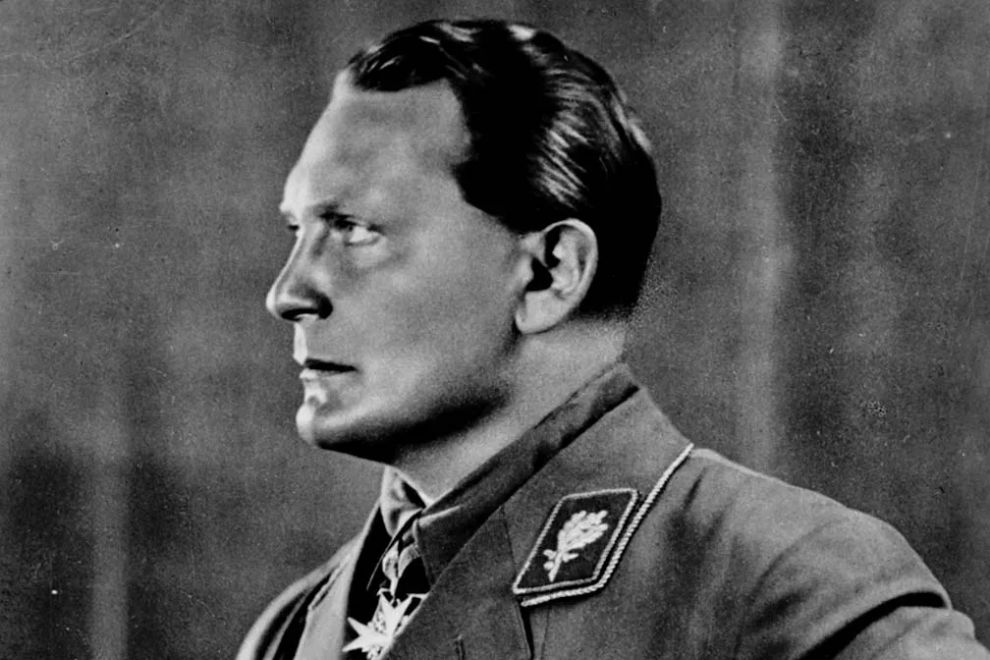
Introduction Hermann Wilhelm Göring remains one of the most infamous figures of the 20th century. As a decorated fighter pilot in World War I, a founding member of the Nazi Party’s leadership, commander of the Luftwaffe (German Air Force) during World War II, and one of Adolf Hitler’s closest associates, Göring’s life was a mixture of ambition, ruthless political maneuvering, and eventual downfall. His story serves as both a historical study of political power and a warning about the dangers of unchecked authority. Early Life and Military Career Born on January 12, 1893, in Rosenheim, Bavaria, Hermann Göring came from a family with military traditions. His father, Heinrich Ernst Göring, served as a colonial governor, and young Hermann grew up with a sense of nationalism and pride in military service. Göring attended cadet school and later served as an infantry officer before joining the German Air Service during World War I. He became an accomplished fighter ace, eventually leading Manfred von Richthofen’s famous “Flying Circus” after the Red Baron’s death. His aerial skill earned him medals and public admiration. Joining the Nazi Party After World War I, Göring found postwar Germany politically unstable and economically broken. In 1922, he joined Adolf Hitler’s National Socialist German Workers’ Party (NSDAP) and quickly became a key figure due to his charisma, war hero status, and leadership skills. Göring played a role in the 1923 Beer Hall Putsch, an early Nazi attempt to seize power. The failed coup left him seriously wounded, forcing him into exile for several years. During this time, he developed a dependency on morphine due to medical treatment for his injuries—a habit that would follow him for the rest of his life. Rise to Power in Nazi Germany When the Nazis came to power in 1933, Göring became one of Hitler’s most trusted officials. He held multiple roles, including Minister of the Interior for Prussia, where he created the Gestapo, the Nazi secret police. His influence expanded rapidly: During this period, Göring was a master of propaganda, often portraying himself as a cultured gentleman while also engaging in ruthless political purges. The Luftwaffe and WWII The Luftwaffe initially enjoyed great success under Göring’s command, especially during the invasions of Poland and France. However, overconfidence and strategic miscalculations led to significant failures, notably in the Battle of Britain (1940). Göring’s promises of quick air superiority fell apart, damaging his military reputation. He also oversaw the Luftwaffe’s bombing campaigns across Europe, including attacks on civilian populations—a key factor in his later war crimes charges. Role in the Holocaust and War Crimes As a senior Nazi official, Göring signed orders that enabled the “Final Solution”—the systematic genocide of Jews and other minority groups. He directed the confiscation of Jewish property and supported policies of forced labor, deportations, and executions. Göring’s luxurious lifestyle during wartime, including collecting stolen art, contrasted sharply with the suffering across occupied Europe. This greed and detachment from reality became one of his defining traits. The Fall of the Third Reich By 1945, Germany’s military collapse was imminent. Göring’s relationship with Hitler deteriorated after he suggested taking over leadership in the final days of the war. Hitler viewed this as betrayal, stripped Göring of his titles, and ordered his arrest. He was captured by American forces in May 1945 while trying to negotiate with the Allies. The Nuremberg Trials Göring became the highest-ranking Nazi on trial at Nuremberg. Articulate and unrepentant, he used the courtroom to defend the Nazi regime and himself, often clashing with prosecutors. He was found guilty on all counts—war crimes, crimes against humanity, and crimes against peace—and sentenced to death by hanging. The night before his execution in October 1946, Göring committed suicide by ingesting cyanide. Historical Analysis Hermann Göring’s career is a case study in: While some contemporaries saw him as charismatic, history remembers him as a symbol of Nazi brutality and the destruction it caused. Lessons from History 50 Original Hermann Göring-Inspired Quotes (Note: These are newly written for educational and illustrative purposes, inspired by his historical persona, not direct reproductions.) Conclusion Hermann Göring’s life is not just the biography of a man—it is the story of a nation’s descent into dictatorship, war, and atrocity. From celebrated fighter pilot to condemned war criminal, his rise and fall reflect the dangers of political extremism and personal corruption. His legacy is a stark reminder that ambition without moral boundaries inevitably leads to destruction.